Discover a city that lives and breathes art, with unique architecture, rich cultural tradition, outstanding gastronomy, and a vibrant everyday life.
Seat of the Regional Unit and the administrative and cultural centre of the area, Florina is a city that feels familiar from the very first moment. The presence of students from the University of Western Macedonia brings a youthful energy and fresh ideas, while cultural associations keep the city alive throughout the year with a rich programme of events. Contemporary artistic interventions, such as the iconic ‘Contralto’—the bear with a double bass that greets visitors at the city entrance—add a playful touch to the urban landscape. Important museums, including the Archaeological Museum and the Museum of Contemporary Art, alongside historic monasteries and other points of interest, are complemented by a dynamic and ever-evolving gastronomic scene, ensuring there is always something to see and experience.
Municipality of Florina
On the Trails of Art and Nature
Muse of Theo Angelopoulos and often described as the artistic capital of West Macedonia, Florina captivates from the very first moment. Beyond its striking natural landscapes, explore its rich cultural heritage, its vibrant culinary identity, and a dynamic, outward-looking cultural scene that brings the city to life throughout the year.
Surrounded by mountains dressed in white during winter and adorned with golden hues in autumn, and beside waters that reflect three countries, the Regional Unit of Florina is an authentic, vibrant place, full of contrasts. From the slopes of Varnoundas to the shores of the Prespa Lakes and the trails of Mount Verno, the region unfolds like a painting at the northwestern edge of Greece, on the borders with Albania and North Macedonia. Here, nature and tradition weave vivid images, the seasons change dramatically, and art is inspired to tell unique stories. It is no coincidence, after all, that Theo Angelopoulos chose to set his films in the city and its surrounding landscape.
The city of arts
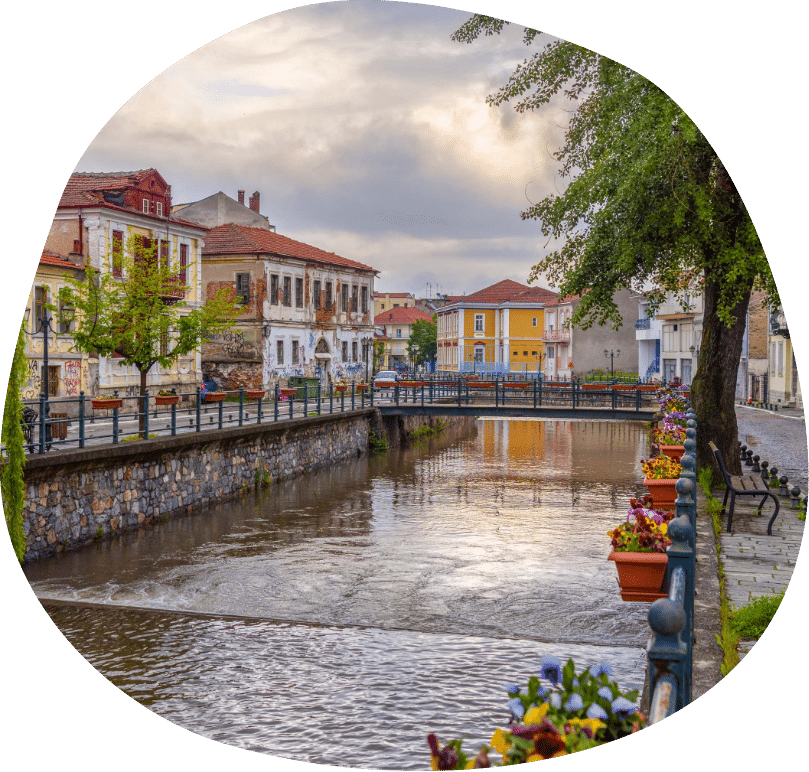
The capital of both the municipality and the regional unit is Florina, embodying the region’s very soul; a city embraced by imposing mountains and crossed by the Sakoulevas River. Along its banks, you will stroll among striking mansions, lively cafés, and artistic hangouts. Here beats the heart of West Macedonia’s cultural life, with museums, exhibitions, departments of the University of Western Macedonia, and countless events that give the city its irresistible creative pulse.
You will notice it from your very first stroll: Florina lives and breathes art. At the entrance to the city, ‘Kontralto’—the striking bear sculpted from scrap metal, sheet iron, and steel plates by George Bardakas—sets the tone, a playful yet powerful symbol of a place where creativity is part of everyday life. That same artistic pulse continues at the Museum of Contemporary Art, home to more than 700 works created after 1950, where temporary exhibitions by Greek and international artists constantly renew the dialogue with contemporary creation. And then, as you wander deeper into its rhythm, the story unfolds in the heart of Florina itself. On the first floor of the neoclassical building that hosts the famous—through Angelopoulos’ films—”Diethnes” café, the Folklore Museum of the Cultural Association draws you into another time: beekeeping, weaving, traditional professions, music, and dance all come alive, revealing, detail by detail, the intimate soul of the city.
Stone Villages and Timeless Hospitality
Beyond the city, villages that seem to have stepped straight out of a postcard invite you to slow down and discover another side of Florina. The martyr village of Drosopigi, Flampouro with its listed stone-built school, picturesque Kratero set amid breathtaking scenery, and Alona, close to the Vigla–Pisoderi Ski Centre, all retain their own distinct character, calling you to experience a slower pace of life. Here, hospitality is second nature: the fireplace is always warm, the welcome always genuine, and the table generously laid with homemade pies, Prespa beans, and a glass of Xinomavro wine from Amyntaio—flavours that tell the story of the land better than words.
Festivals and Traditions All Year Round
The festive spirit begins on the night of 23 December, when Florina is illuminated by its famous Christmas Fires. Bonfires blaze across the city, while music, dancing, local treats, and shared celebration create one of northern Greece’s most unforgettable winter traditions. As spring arrives, the Lazarines bring colour and song to the streets in their traditional costumes, before the Cultural Summer festival transforms squares and courtyards into lively open-air stages filled with music, theatre, and artistic performances.
From prehistoric settlements to the turbulent 20th century
Florina’s history stretches back to the Neolithic age and moves through Roman, Byzantine, and Ottoman times, before the early 20th century brings some of its most defining chapters, shaped by the Macedonian Struggle and the wars that followed.
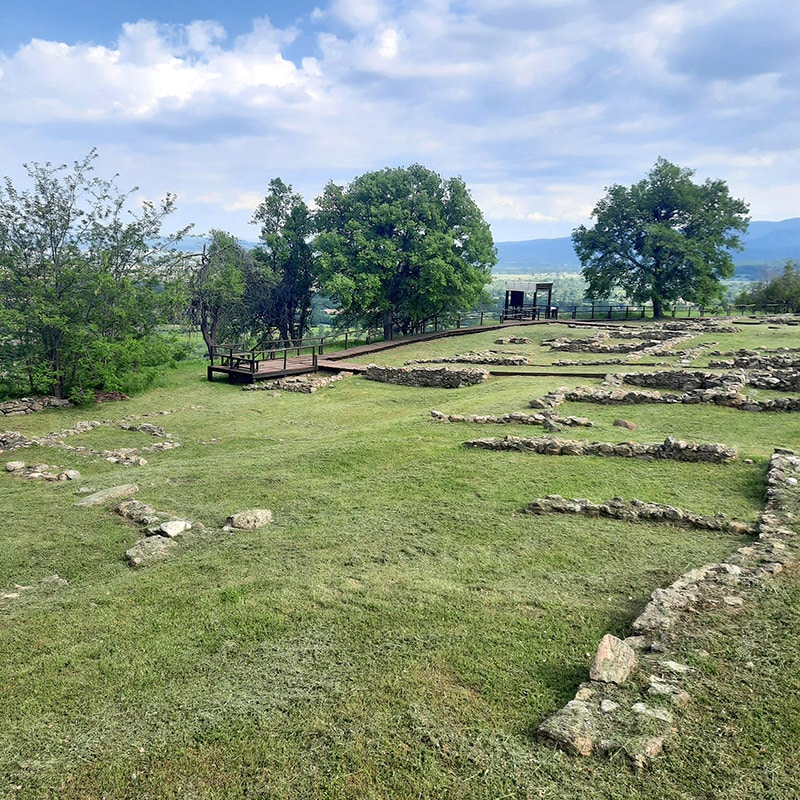
Geography has always shaped Florina’s destiny. Lying on the borders with Albania and North Macedonia, it has long served as a crossroads of routes, cultures, and people. Human presence in the region dates back to the Neolithic period and continued uninterrupted into the Hellenistic age, when the kingdom of Lygistida flourished.
In 148 BC, the Romans incorporated the region into the fourth district of Macedonia, and a few centuries later the Byzantine Empire left its own mark on ecclesiastical architecture and administration. This was followed, in 1096 AD, by the passage of the Normans, while in the 13th century Florina became part of the Despotate of Epirus. With the conquest of the area by Sultan Murad I in 1385, Florina entered a long Ottoman period that would last until November 1912.
During the Macedonian Struggle, the region became a focal point of conflict and resistance. Figures such as Lakis Pyrzas and Captain Rakovitis, born Pavlos Nikolaidis, operated actively in the area, monasteries served as places of refuge, and important victories were achieved against Bulgarian forces. In the First World War, Florina was at the centre of the Allied offensive of 1916, while in the Second World War it suffered devastating losses with the destruction of its Jewish community, whose members were deported to Nazi concentration camps in 1943. The Civil War that followed left deep scars on the region and its people, while on 12 February 1949 the bloody Battle of Florina took place in the area, marking the beginning of its final phase.
From the 1970s onwards, the city began to write its own remarkable chapter in the arts, as painters and sculptors such as Koulis Sterikas and Dimitris Kalamaras founded the House of Art Lovers, the Museum of Contemporary Art, and the first bronze-casting workshop at the School of Fine Arts.
Winter and summer alike, Florina’s customs come alive in every season, keeping the flame of tradition burning. Unique cultural events bring generations together, revealing the soul of the Macedonian land and inviting visitors to become part of the celebration.
From Christmas celebrations and summer events to the potato, strawberry, and beer festivals, Florina moves to the rhythm of a vibrant calendar that reflects the culture, creativity, and joy of a place that never stops celebrating.
Florina is an ideal destination for outdoor adventure, exploration, and a deep connection with nature. Its mountains, forests, and surrounding lakes offer countless opportunities for unforgettable experiences.
Hiking
Trails with panoramic views, well-marked routes connecting villages with mountain tops, and forests filled with beech and birch trees await...
Trails with panoramic views, well-marked routes connecting villages with mountain tops, and forests filled with beech and birch trees await you to test your endurance and feel the true freedom of nature. The region’s hiking routes cater to all levels—from riverside strolls to extremely challenging mountain trails. The hill of Agios Panteleimon, as well as the routes near the area’s lakes and the circular walks around the villages, are ideal choices if you are seeking tranquillity and a close connection with nature.
Skiing and mountaineering
When the snow falls, Florina transforms into a winter dream. At the Vigla–Pisoderi Ski Center, half an hour from the...
When the snow falls, Florina transforms into a winter dream. At the Vigla–Pisoderi Ski Center, half an hour from the city centre, the slopes come alive with runs for all levels, cozy chalets to get some rest, and views stretching all the way to the Prespa Lakes. For mountaineering enthusiasts, Florina is a true paradise, with mountains such as Varnountas, Vernon, and Voras rising all around and challenging the adventurous to conquer their summits.
Rock climbing
Do you love heights, challenge, and adventure? Florina offers well-organised climbing areas with permanent anchors and routes of varying difficulty....
Do you love heights, challenge, and adventure? Florina offers well-organised climbing areas with permanent anchors and routes of varying difficulty. Even without prior experience, you can try climbing with the guidance of experienced instructors, enjoying the unique feeling of ascending the rock faces with the peaks of Macedonia unfolding around you.
Horse Riding
Here, horse riding becomes a true way of experiencing the landscape rather than just an activity. Paths winding through meadows,...
Here, horse riding becomes a true way of experiencing the landscape rather than just an activity. Paths winding through meadows, forests, and small streams welcome both beginners and experienced riders, guiding you into the heart of Macedonia’s natural beauty at the calm, steady rhythm of the horse.
A taste of Florina
PDO products, local recipes, and scents from the mountains and lakes of West Macedonia come together to form a cuisine full of authenticity and character. Florina’s gastronomy is as rich as its history.
Florina is a land blessed not only with natural beauty, but also with a rich culinary identity shaped by Macedonian, Balkan, and Pontic influences, coming together in a cuisine unlike any other. At its heart is the famous Florina pepper—red, sweet, and aromatic—a true symbol of the local table, used in countless ways: pickled, stuffed, roasted, or cooked with meat and legumes. Alongside it, Florina’s kebapia, grilled and seasoned with bukovo, a traditional spice made from dried and crushed red chili pepper flakes, echo the shared flavours and culinary traditions of the wider Balkans.
Dairy products also have their own special place here, with Florinela standing out as a local favourite. This semi-hard, cylindrical cheese made from goat and sheep milk is rich in flavour and full of character. In the tavernas, you’ll also find sout makalo, a comforting traditional dish of West Macedonia made with oil, flour, garlic, and spices, ideal as an accompaniment to meat dishes. And then there are the pies—found from Drosopigi to Flambouro—made with handmade pastry and endless variations, from greens and cheese to sweet or sourdough versions, each one carrying a piece of living tradition.
Beans also hold a prominent place in Florina’s cuisine, whether in a hearty bean soup or baked in the oven with herbs, standing as a true signature of the Prespa region and the surrounding villages. The naturally carbonated mineral water “xino nero” from the springs of Itea and Pappagiannis often accompanies meals, while spoon sweets and jams, prepared according to traditional recipes, fill the air with the aromas of an old Greece full of authenticity. Florina is known for its wild mushrooms, gathered from the nearby forests, as well as for its tsipouro and wine, which are an essential part of local hospitality and shared moments. Together, they form a rich culinary map that vividly reflects the soul of the region.