Discover a small yet vibrant town firmly rooted in its past while confidently embracing the future.
Amyntaio is a small town full of life, with lively squares, cafés filled with the aromas of tsipouro and Florina peppers, and streets that invite you to wander at a leisurely pace. Just 33 km from Florina, it takes its name from Amyntas III, the grandfather of Alexander the Great, and proudly preserves its heritage while continuing to evolve.
Gatherings that bring back memories of times gone by
In autumn, Amyntaio takes on a festive character. On the first weekend of October, the annual Trade Fair fills the town with stalls, brass bands, and lively encounters that evoke the charm of times gone by. In December, neighbourhoods come together around the great fires of “Tsiri-Varvara” — bean soup simmers over the flames, wine and tsipouro flow, and dancing continues late into the night. Here, tradition is not just remembered. It is experienced, shared, and kept alive.
Municipality of Amyntaio
Between lakes, vineyards, and memories
Four lakes mirroring enchanted forests, villages woven along stone-paved paths, and age-old vineyards steeped in history. In Amyntaio, nature meets the soul of Macedonia.
Known as the land of the four lakes and the home of the celebrated Xinomavro grape variety, Amyntaio stretches between tranquil waters, beech forests, and fertile vineyards, across a landscape whose colours transform with the seasons. Here, nature and people coexist in lasting harmony: the ARCTUROS protects local wildlife, while centuries-old winemaking traditions continue to thrive in wineries open to visitors. At the same time, the municipality’s villages — from Nymfaio and Lechovo to Agios Panteleimonas and Petres — celebrate their heritage through architecture, festivals, and customs. Surrounded by the lakes Vegoritida, Petron, Zazari, and Cheimaditida, Amyntaio invites you to discover a destination of serenity, flavour, and renewal, where every season reveals a different beauty and every experience leaves a lasting impression.
Land of the four lakes
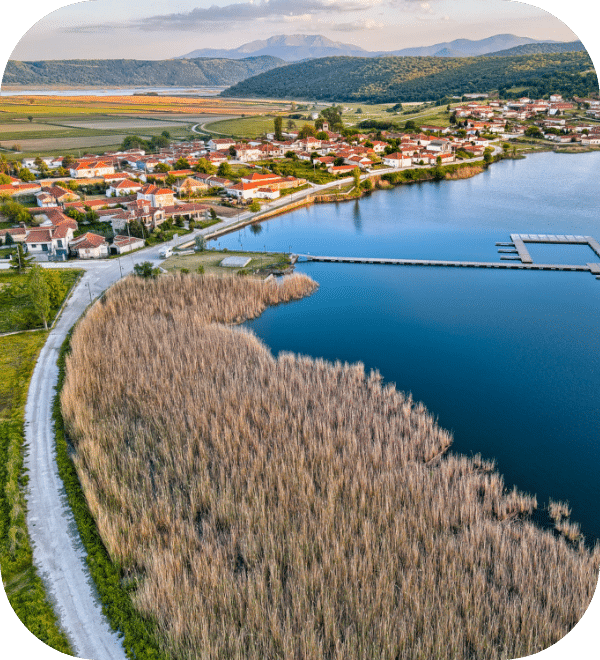
The lakes of the Municipality of Amyntaio are unique natural landscapes and wetlands of rare ecological importance, providing vital habitats and resting places for migratory birds. Along their shores, picturesque lakeside villages invite you to enjoy moments of tranquillity: boats gently swaying on the water, morning mist drifting across the surface like a delicate veil, and sunsets painting the sky in countless dreamlike hues.
Stone, Wood, and Light: Villages Shaped by Time
Nymfaio unfolds amphitheatrically on the mountainside, widely regarded as one of Greece’s most beautiful traditional settlements. Its cobbled alleys wind between Macedonian mansions topped with galvanised roofs that shimmer in the light, creating the impression of a village forever covered in snow when seen from afar. Nearby, Lechovo welcomes you with its distinctive stone-built architecture, imposing bell tower, and hidden corners waiting to be discovered around its central square. Officially recognised as a Martyr Village in 1998, it preserves a unique character that reflects the history and heritage of the region. Across the surrounding landscape, you can discover tower houses, preserved stone settlements, and the windmill of Agios Panteleimonas, all adding to the area’s architectural identity. Closer to the lakes, the villages of Agios Panteleimonas, Petres, and Limnochori invite you to slow down and enjoy their tranquil setting. Reflected in the calm waters, they reveal narrow lanes leading to the shores, welcoming guesthouses offering warm hospitality, and village squares coming alive with voices, music, and stories throughout the year.
Wildlife and experiences in nature
In Nymfaio, the ARCTUROS introduces you to the world of the brown bear: first through the Information Centre housed in the historic Nikieios School, and then at the visitable bear sanctuary hidden in the forest outside the village. Together with the Wolf and Lynx Sanctuary in Agrapidia, it offers a fascinating insight into the delicate relationship between humans and wildlife. Surrounded by beech and oak forests, where sunlight filters through the leaves and the scent of damp earth fills the air, you can explore a landscape rich in natural beauty and outdoor experiences. Trails invite you to hike or cycle through the mountains, while the surrounding hills provide the perfect setting for climbing and archery. On the region’s tranquil lakes, you can enjoy canoeing and experience the landscape from a completely different perspective.
A Taste of the land and the vine
The hills surrounding Amyntaio are carpeted with vineyards of Xinomavro, the region’s emblematic grape variety and the foundation of its Protected Designation of Origin (PDO) wine tradition. At local wineries, which warmly welcome visitors, you can discover the story of the land through tastings, guided tours, and conversations centred on the vineyards and the generations of tradition behind them. The local cuisine is deeply rooted in Macedonian flavours, offering specialties such as stuffed or roasted Florina peppers, sout makalo (fried meatballs served in a rich garlic and paprika sauce), carp and other lake fish, mushrooms, handmade pies, dairy products, and apples and peaches from the region’s orchards. In November, the traditional distilleries of Agios Panteleimonas come alive: tsipouro flows from the copper stills, brass bands fill the air with music, and the entire village joins in the celebration. To complete your culinary experience, a glass of the renowned naturally carbonated mineral water “Xino Nero” offers the perfect refreshment and a fitting accompaniment to Amyntaio’s distinctive gastronomic identity.
From a Neolithic settlement to railway tracks
The history of Amyntaio stretches back to the Iron Age (some say even earlier), travels along the first Roman Via Egnatia, passes through the railway lines of the 19th century that fuelled the town’s economic growth, and reaches the 20th century, when the Macedonian Struggle and the population exchange left their deep mark on the region.
The land of Amyntaio bears traces of human presence dating back thousands of years. On the northern shores of Lake Petron, archaeological excavations have revealed evidence of a settlement dating back to the Iron Age, while on the southwestern side of the lake, on the hill of Gradista, a thriving city developed during the Hellenistic and Roman periods. This city controlled the passage from Lynkestis to Eordaea — the route connecting Upper and Lower Macedonia. The Hellenistic city of Petres, founded by Philip II, flourished from the mid-2nd century BC onwards, when the Via Egnatia connected the area to the great commercial and military networks of the ancient world. Nearby, Kelli, identified with the ancient settlement of Kella, served as an important station along this historic Roman road.
Centuries later, in the mid-18th century, families from the surrounding mountains descended into the fertile lake valley, establishing the first residential core of modern Amyntaio. By the late 18th century, the area had come under the rule of Ali Pasha of Ioannina. A major turning point came a century later with the arrival of the railway: in 1892, the Sultan approved the extension of the Constantinople–Thessaloniki line to Monastir, placing Amyntaio along this important new route. The town soon developed into a growing economic centre of West Macedonia, a role it maintained until the mid-20th century.
During the Macedonian Struggle, the people of Amyntaio played an active role in the fight, with chieftains such as Alexis and Stavros Chatzis, as well as figures including Captain Vangelis Strebeniotis from Asprogeia and Michail Tsirlis from Nymfaio — a physician and first-class agent who combined his scientific knowledge with his devotion to his homeland. The liberation of the region in November 1912 brought Ottoman rule to an end and marked the beginning of a new chapter. The years that followed brought further change, as the population exchange between Greece and Turkey transformed the area’s demographic landscape: Muslim populations departed, while Pontic Greek refugees settled in the region, bringing with them traditions and customs that became an integral part of its cultural identity.
Amyntaio is synonymous with living tradition—customs passed down from generation to generation. From the December fires that chase away the darkness to the summer traditions that bring villages to life, every custom is an expression of the land itself, brought to life through music, wine, dancing, and the warmth of its people.
Nestled among lakes, forests, and vineyards, Amyntaio offers experiences that awaken the senses and bring you closer to nature. Here, every season reveals a different adventure — from horseback riding and cycling to canoeing, hiking, and wine tasting.
Horseback riding
The lakeside landscapes and lush green forests of Amyntaio invite you to enjoy a horseback ride, an experience that combines...
The lakeside landscapes and lush green forests of Amyntaio invite you to enjoy a horseback ride, an experience that combines the serenity of nature with a true sense of freedom. With shimmering lakes and mountain slopes as your backdrop, riding along the trails allows you to immerse yourself in the rhythm of the landscape, accompanied by the sound of the wind through the trees, the gentle flow of water, and the steady hoofbeats of the horses beneath you.
Canoeing on Lake Zazari
In the heart of West Macedonia lies Lake Zazari, a mirror of the sky embraced by mountains and forests. Canoeing...
In the heart of West Macedonia lies Lake Zazari, a mirror of the sky embraced by mountains and forests. Canoeing across its calm waters offers a truly uplifting experience: cormorants and pelicans glide above the tranquil surface and nest among the reeds, the air is filled with the scents of nature, and each stroke of the paddle creates a peaceful journey through the lake’s serene landscape.
ARCTUROS – Nymfaio and Agrapidia
In Nymfaio, inside the stone-built Nikieios School, the ARCTUROS Information Centre awaits you. Here, you will discover everything you have...
In Nymfaio, inside the stone-built Nikieios School, the ARCTUROS Information Centre awaits you. Here, you will discover everything you have ever wanted to know about the brown bear: its journey from ancient times to the present day, fascinating biological and ecological facts, the threats it faces in the mountains of Greece, and the current framework for its protection. Just outside the village, the Bear Sanctuary unfolds within a specially designed 50-acre forest area, where you can observe up close the bears cared for and protected by ARCTUROS. Rescued from captivity, these animals have found a safe new home in the heart of the forest. A short distance away, in Agrapidia, the Wolf and Lynx Sanctuary lies within a 70-acre oak forest, offering the opportunity to observe these rare animals thriving in a protected natural environment. At both sanctuaries, the tranquillity of the surroundings, the light filtering through the leaves, and the sounds of the forest create a unique experience that can be enjoyed by visitors of all ages.
Info: Open daily except Wednesday | Guided tours 10:00–16:30 | Tickets: €8 adults, €5 children (ages 5–12), free for children up to 4 years old | Website: arcturos.gr
Wine tourism in Amyntaio
As one of Greece’s leading wine tourism destinations, Amyntaio invites you to discover both traditional and modern wineries. Wander through...
As one of Greece’s leading wine tourism destinations, Amyntaio invites you to discover both traditional and modern wineries. Wander through vineyards, fermentation tanks, and cellars, and learn about the processes of production, ageing, and bottling. Most importantly, taste the area’s exceptional wines — led by PDO Amyntaio Xinomavro, a robust and aromatic wine full of character, much like the land from which it comes. Wine tastings are accompanied by local delicacies such as Florina peppers, cheeses, and pies, highlighting the flavours of Macedonian cuisine. As glasses are filled and shared, you will discover that wine tourism in Amyntaio is about far more than tasting wine: it is a sensory journey where tradition meets contemporary winemaking, and flavour becomes memory, history, and emotion all at once.
Mountain biking
If you enjoy mountain biking through landscapes of lakes, forests, and fertile hillsides, Amyntaio is your natural paradise. Routes winding...
If you enjoy mountain biking through landscapes of lakes, forests, and fertile hillsides, Amyntaio is your natural paradise. Routes winding through ever-changing scenery, trails climbing among beech and oak trees, and dirt tracks opening onto panoramic views of the lakes create the perfect setting for adventure and discovery.
Archery and rock climbing
For those seeking adventure, Amyntaio offers activities that awaken the senses and challenge the spirit. Archery sharpens focus and concentration...
For those seeking adventure, Amyntaio offers activities that awaken the senses and challenge the spirit. Archery sharpens focus and concentration amid the quiet of the forest, while rock climbing rewards you with breathtaking views over lakes, forests, and endless skies. Here, nature is not merely a backdrop, but a living companion throughout every experience.
Hiking in the mountains
Hiking is one of the most rewarding experiences for those seeking a closer connection with nature and gentle physical activity....
Hiking is one of the most rewarding experiences for those seeking a closer connection with nature and gentle physical activity. Trails wind through enchanting forests, cross meadows carpeted with wildflowers, and reveal spectacular views of lakes, mountain peaks, and the region’s unrivalled natural scenery at every turn. The scent of damp earth, the crunch of leaves beneath your feet, and the tranquillity of the surroundings transform a simple walk into a truly revitalising experience — one that only nature can provide.
A journey into the flavours of Amyntaio
The gastronomy of Amyntaio is a journey in itself — a taste of the land, the water, and the air of Macedonia. Shaped by fertile soil and a long agricultural tradition, the region offers ingredients full of character, from fresh fruit and vegetables to artisanal cheeses and handmade pies that reflect the region’s rich culinary heritage.
Start with the famous Florina pepper. Its deep red colour and sweet, rich flavour make it the undisputed star of the local table. Enjoy it roasted, stuffed, transformed into sauces or even jams, before sampling carp freshly caught from the region’s lakes and sout makalo — a comforting garlic- and paprika-infused sauce traditionally served with meat.
Beyond these signature dishes, pies hold a special place in Amyntaio’s culinary tradition. Considered an art form, they combine crisp handmade pastry with generous fillings and flavours that reflect the region’s rich heritage. Wild mushrooms gathered from the surrounding forests enrich soups, pasta dishes, and game recipes, while local dairy products add depth and character to both everyday meals and festive tables.
At local markets, stalls overflow with apples and peaches—from the area’s products of a flourishing fruit-growing tradition for which Amyntaio is known across Greece. As winter approaches, the Rakokazana (traditional tsipouro distillation celebrations) of Amyntaio light up come to life during the last week of November in Agios Panteleimonas. Friends gather around the fire, tsipouro flows incessantly, brass bands set the rhythm, and the festivities spread throughout the area.
At the heart of every table and celebration, a glass of PDO Amyntaio Xinomavro accompanies the meal. Deep, full-bodied, and aromatic, it comes from wineries that have carried the name of Amyntaio far beyond Greece’s borders. To complete the experience, enjoy a glass of the renowned naturally sparkling mineral water from Xino Nero — cool, refreshing, and rich in character, as pure and authentic as the land from which it springs.