Kozani – Περιφέρεια Δυτικής Μακεδονίας
https://visitwestmacedonia.gr/wp-content/uploads/2026/06/kozani_2.png

Kozani

Everything you need to know about the city


Vibrant, youthful, and full of energy, Kozani knows how to bridge contemporary creativity with tradition, how to share its renowned flavors, and how to draw you into the lively rhythm shaped by its student community — a pulse that defines its core today.

Welcome to Kozani, a city filled with life, energy, and youthfulness. Built at an elevation of 720 meters in the heart of Western Macedonia, between Mount Vermio, Mount Vourinos, and the Pierian Mountains, close to Lake Polyfytos, it serves as the seat of the Regional Unit of Kozani and the largest urban center in the region. The city knows how to safeguard its bridges to the past while living firmly in the present — and how to maintain its connection with the unique natural landscape of Macedonia.

A stroll around the historic center

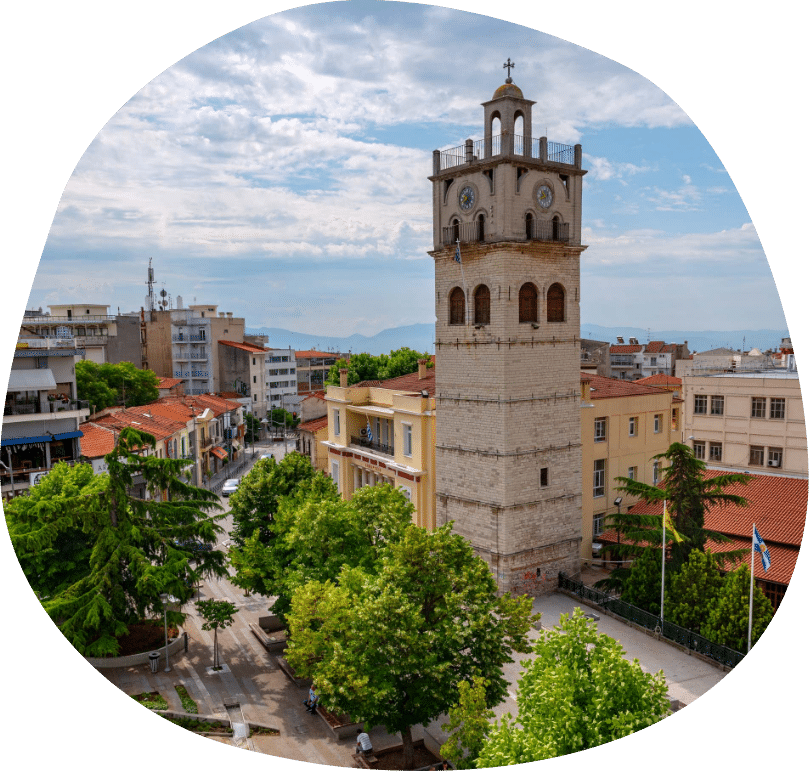
As you walk through Kozani’s historic center, you will be impressed by the Vourkas and Lassanis mansions — fine examples of traditional Macedonian architecture. You will admire historic buildings such as the City Hall and stand in awe before the Metropolitan Church of Saint Nicholas, one of the city’s most iconic landmarks, built in 1664. It stands on the central Nikis Square, and beside it, rising from the bell tower, is Kozani’s Clock (locally known as “Mamatsios”), which first rang on New Year’s Day, in 1940. Both the square and the surrounding streets and pedestrian areas are also the perfect place to enjoy coffee, food, or drinks, as most of the city’s restaurants, traditional taverns, cafés, and bars are gathered here.

Culture in every possible form

During your stay, you will discover that Kozani is home to significant cultural institutions, including the Historical-Folklore and Natural History Museum, the Archaeological Collection, the Museum of Modern Local History, and the Koventareios Municipal Library — one of the most significant libraries in Greece. It is the younger generation, however, that sets the tone. The city hosts the University of Western Macedonia, a modern academic institution that brings student energy and vibrancy. There is always something happening that you will wish to attend: festivals, concerts, exhibitions, and traditional celebrations. The highlight? The Kozani Carnival with the “Fanoi” fires — a unique custom featuring bonfires, music, singing, and dancing that fills the city with color and joy.

Municipality of Kozani

Your next travel surprise

If you are looking for travel experiences beyond the ordinary, the Municipality of Kozani is a destination that will surprise you with its offerings. A long history and natural beauty, contemporary vibrancy and living traditions, outstanding gastronomy and flourishing wine tourism come together to form a fascinating travel tapestry worth exploring.

The Municipality of Kozani, with the city of Kozani as its seat and capital of Western Macedonia, is among the most dynamic municipalities in the region — administratively, economically, and culturally. It is home to both urban and rural areas, with rich cultural traditions and distinctive customs, as well as numerous villages where refugees settled during the population exchange, bringing their own unique heritage.

https://visitwestmacedonia.gr/wp-content/uploads/2026/02/me-mia-matia_kozani_1-1.png

Kozani, a youthful city

Kozani will win you over from the very first glance with its lively, youthful personality. It is the largest urban center in Western Macedonia, with a large student community of the University gracing it with a fresh, dynamic pulse. As you explore, be sure to visit the Koventareios Municipal Library, the Vourkas and Lassanis mansions, and the impressive Metropolitan Church of Saint Nicholas. Check the event calendar — something interesting is happening year-round. And, of course, do not miss the ultimate highlight: the famous Kozani Carnival, an experience not to be missed.

In the footsteps of history

If you follow the historical trails of the Municipality, you will inevitably arrive at Aiani, its historic seat — a vibrant town set within lush surroundings, just 12 miles from Kozani. Aiani is considered the most important city of the ancient Kingdom of Elimeia in Upper Macedonia. At the remarkable archaeological site on the “Megali Rachi” hill, the impressive royal necropolis with its richly furnished tombs, and the Archaeological Museum, you will feel the pulse of ancient Macedonia come alive. Kozani’s history does not end in antiquity. It continues through the Byzantine era and the Ottoman period, when the area evolved into an important commercial and intellectual center. The people of Kozani participated in all major national struggles — from the War of Independence in 1821 and the Macedonian Struggle to the Balkan Wars and the National Resistance. Landmark moments for the region include its liberation in 1912 and the arrival of refugees in 1923, which breathed new life into the area and introduced new traditions that blended with local customs to create a unique cultural mix. If you want to read through this complex past from every angle, explore the Municipality’s landmarks, historic churches, museums, and folklore collections. There, you will find the thread that connects the land to the everyday lives of its people — and to its larger historical narrative.

Living tradition

Here, the past is not confined to museums and monuments. Tradition remains alive and present in the famous Kozani Carnival, as well as in customs such as the Lazarines, Lougatsaria, the Camel Ritual, the Momogeroi, the Double Dance, and the Egg Battles — celebrations that color the rhythm of the seasons and bring communities together. You will experience this same vibrant connection to heritage and lust for life at local festivals organized by cultural associations, as well as events hosted by the Municipality and other institutions.

The land of saffron calls you to experience it

Kozani, synonymous with its world-famous saffron, invites you to discover the world of the “gold of Kozani’s land”, along with its many natural wonders. From the striking purple saffron fields to the scenic route through the Chandakas Gorge, and from the Ilarion Dam to Lake Polyfytos, a journey through the Municipality of Kozani offers moments of relaxation and aesthetic delight amid beautiful landscapes and engaging activities.

Flavors of tradition and wine routes

Saffron that enhances every dish, golden-crusted pies, tender leeks, premium potatoes, pungent garlic, and exceptional cheeses; all of these local products are the great secret of Kozani’s gastronomy. The cuisine blends local traditions with refugee influences. These flavors pair harmoniously with excellent local wines —robust reds, crisp whites, and aromatic rosés— that you can sample during organized wine tours at local wineries.

However you choose to experience the Municipality of Kozani —through its nature, flavors, history, or people— one thing is certain: it will surprise you in the most pleasant and genuine way.

A place with deep roots in time

From the glorious campaign of Alexander the Great to the flourishing of the 17th century, from the War of Independence in 1821 to the National Resistance, Kozani has played its own major role in the course of Greek history.

The history of Kozani begins in the Paleolithic era and continues uninterrupted to the present day. Archaeological findings show that the area was always connected to the broader Greek world. During the reign of Philip II (359–336 BC), the small kingdoms of Upper Macedonia were united into the Macedonian Kingdom, and the Elimiotes tribe of the region took part in Alexander the Great’s legendary campaign as far as the Indus River.

In 168 BC, following the Battle of Pydna, the region came under Roman rule and later became part of the Byzantine Empire. In 1389 AD, following the Battle of Kosovo, the Ottomans occupied the region, while a few years later, in 1392 AD, refugees from Epirus settled here and founded the settlement that would gradually evolve into modern-day Kozani.

Ottoman rule would last for more than five centuries, with the city experiencing its greatest flourishing in the 17th century. This prosperity was also supported by the imperial firman secured by Charisios Trantas, which designated Kozani as a Malikâne—a possession of the Sultan’s mother—and granted special privileges to its inhabitants, including the prohibition of Muslim settlement and the free practice of their religious customs. The city developed commercial ties with Constantinople, Hungary, Poland, and Germany, while its products —most notably saffron— traveled all throughout Europe. At the same time, intellectual life thrived: schools were founded, along with the famous Library of Kozani (1668), all supported by a prosperous diaspora.

Despite plundering and conflicts during the 18th century, the city continued to grow. In the 19th century, Kozani’s citizens actively participated in the Modern Greek Enlightenment and the War of Independence in 1821. Liberation came on October 11, 1912, when the Greek army entered the city triumphantly after the Battle of Sarantaporo. In 1923, approximately 1,400 refugee families from Asia Minor and Pontus arrived, breathing new life into Kozani’s society and economy.

During the years of World War II, the city experienced the harsh German occupation, while the Civil War that followed left a deep mark on its post-war course. With the restoration of peace, Kozani gradually entered a new era of development, closely linked to the energy units of the Public Power Corporation (DEI).

As you get to know Kozani up close, you will see how this entire historical journey —from antiquity to the modern era— continues to shape the city’s distinctive character.


Notable figures who left their mark

In the historical journey of Kozani, certain figures stand out, as their actions and contributions shaped the identity and memory of the place. Among them is Charisios Trantas, the first leader of Kozani, founder of the Church of Saint Nicholas and a great benefactor of the city, as well as his father, Ioannis Trantas, who led 120 families that settled in 1649 and established a settlement in the area known as “Krevatakia”. Other influential figures include Charisios Megdanis, a priest, physician, writer, and teacher in Pest; Georgios Lassanis, a philologist, member of the Filiki Eteria, and aide-de-camp to Alexandros Ypsilantis; as well as Nikolaos Kasomoulis, a colonel and fighter in the Greek War of Independence of 1821. An equally important figure is Konstantinos Mamatsios, a major benefactor of Kozani, who financed the Mamatsio Hospital and donated the clock mechanism of the bell tower of Saint Nicholas. Also, of critical importance was the action of Metropolitan Ioakeim of Servia and Kozani, who played a leading role in the National Resistance during the German Occupation. All these figures, each in their own way, wove the thread of Kozani’s history, leaving behind a living legacy that resembles an endless journey through time.

Tradition comes alive with laughs, songs, and celebrations

Kozani Carnival, Momogeroi, Lazarines, Egg Battles, Kotzamania, Lougoutsaria, the Funerary Customs… Unique cultural events that keep tradition alive, offering you a travel experience you cannot experience anywhere else.

Events not to be missed

Every season in Kozani comes with its own occasions for celebration and connection with the locals, adding color to your journey and getting you acquainted with the place and its people.

Unique experiences in the city and in nature

In the Municipality of Kozani, you will discover the renowned saffron, hike through the enchanting landscape of Chandakas in Aiani, explore the secrets of essential oils, and experience the vibrant rhythm of the city through racing competitions. These are the experiences that will make your journey unforgettable.

Enjoy local cuisine in Kozani

The gastronomic identity of Kozani is a palimpsest of diverse traditions, locally-sourced raw materials, and authentic flavors. As you explore the city and its villages, you will discover a rich cuisine that speaks volumes through carefully selected ingredients, one that is based on recipes passed down from generation to generation.

Kozani’s gastronomy reflects the spirit of its people —locals and refugees who settled in the area— and the ingredients provided by their land. It gains its unique flavor profile thanks to its abundance of high-quality agricultural products cultivated with passion and dedication: from the precious PDO Kozani saffron to the renowned potatoes of Kapnochori with the tight texture and rich flavor, the aromatic leeks of Ano Komi, and the distinctively bold-flavored garlic of Ptelea. These exceptional ingredients enrich local cooking and make every dish one of its kind.

Recipes passed down through generations

From the gifts of the land and the memories, practices, and traditions of its people emerges a cuisine that is rich, authentic, and deeply tied to the seasons, customs, and celebrations of Kozani. Recipes passed down from generation to generation, traditional delicacies, aromatic breads, and desserts with history form a gastronomic map worth exploring.

If you travel to Kozani in winter, you must try giaprakia, the emblematic stuffed cabbage rolls made with armia (pickled cabbage leaves), rice, and minced meat, as well as pork with quinces, a classic Kozani dish for cold days that combines sweet-and-sour notes with a rich, flavorful sauce. At Easter, you will encounter tsitsilato, a traditional delicacy made with offal and fresh spring onions. Loved in every season and always full of flavor, Kozani’s meatballs hold a special place in the local culinary tradition. You will find them in many variations, all equally delicious: from oven-baked meatballs with slowly melting onions to the famous meatballs with “zmi” (the local dialect word for broth), a rich flour-based sauce with garlic and red pepper. Among traditional baked goods, Kozani pies stand out, with their golden, crispy pastry and flavorful fillings. Especially beloved are kichia, spiral-shaped cheese pies made with feta or other local cheeses. It is also worth trying rouftenio bread, made with flour, chickpeas, and basil, known for its distinctive texture and aroma.

Distinctive sweets

If you’re looking for a sweet ending to your meal or simply want to try local desserts, seek out the fragrant baklava with its delicate layers of pastry and coarsely chopped walnuts, or tziam pliaf, a sweet rice pudding made with vermicelli and cinnamon that is traditionally served during festive occasions. As for the zematistoi kourabiedes of Kozani, which you may have already heard about—and if you haven’t, you should definitely try them—they are a dessert completely different from what you may be used to calling a “kourabiedes.” They are not dusted with powdered sugar; instead, they are soaked in syrup and have a rich, buttery flavor.

Wine tourism routes

In the heart of Western Macedonia, wine tourism opens the door to authentic experiences of aromas and flavors. Dare to follow wine and tsipouro roads from the vineyards to your glass, in a welcoming natural landscape.

At selected wineries, you can tour organized vineyards, learn about vine cultivation, and observe the production of wine and tsipouro. Tastings and tours will introduce you to local varieties, from full-bodied reds to fresh whites and aromatic rosés. You will also sample traditional tsipouro distilled in modern facilities that keep the deep-rooted spirit of tradition alive. Beyond the tasting experience, you will become acquainted with old and new cultivation techniques, hear local stories, and experience the warm hospitality of the people who sustain the region’s winemaking heritage.