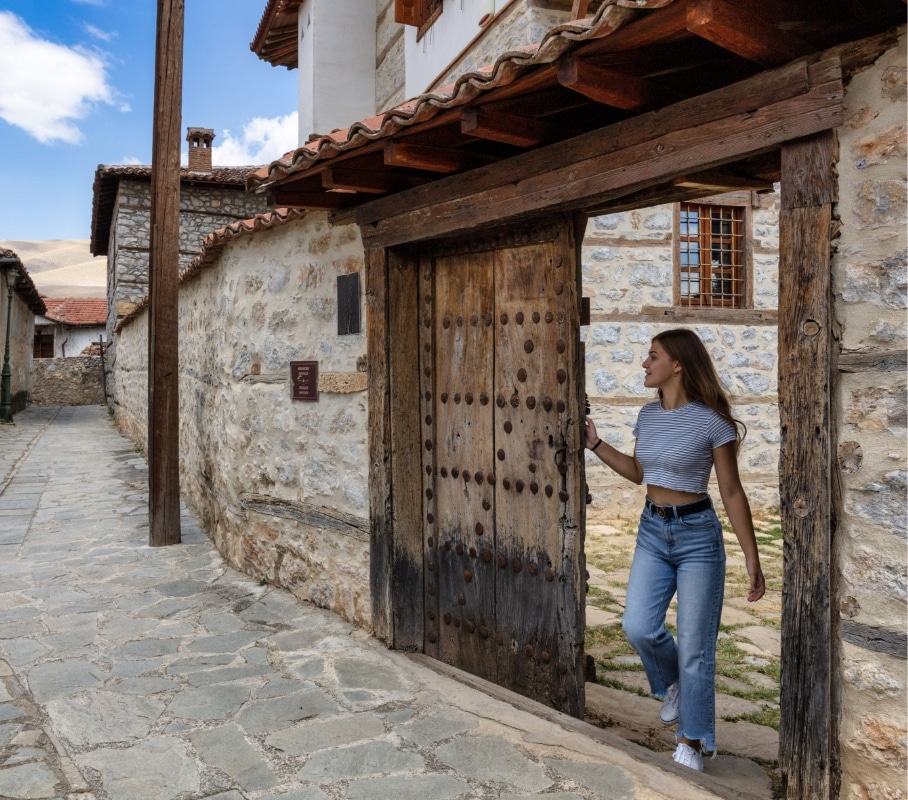
Explore a town that is noble, vibrant, and full of stories — one that will surprise you with a miscellany of facets.
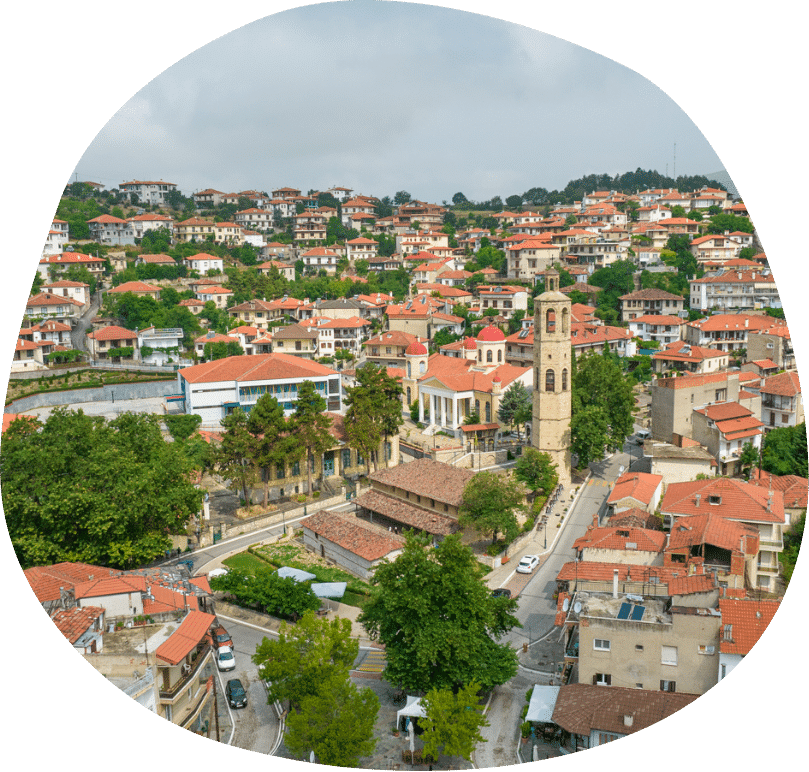
Built on the slopes of Siniatsiko, Siatista is the town where stone became art and tradition became a way of life. At 920 meters above sea level, with its two neighborhoods, Geraneia and Chora, spreading opposite one another, it resembles a living museum of Macedonian elegance.
From the 17th up until the 19th century, Siatista experienced great prosperity thanks to its merchants, furriers, and winemakers. The imposing manor houses with the painted ceilings, the wineries producing the renowned sundried wine, the churches with the rare frescoes, as well as its museums; they all narrate a centuries-long history of creativity and prosperity.
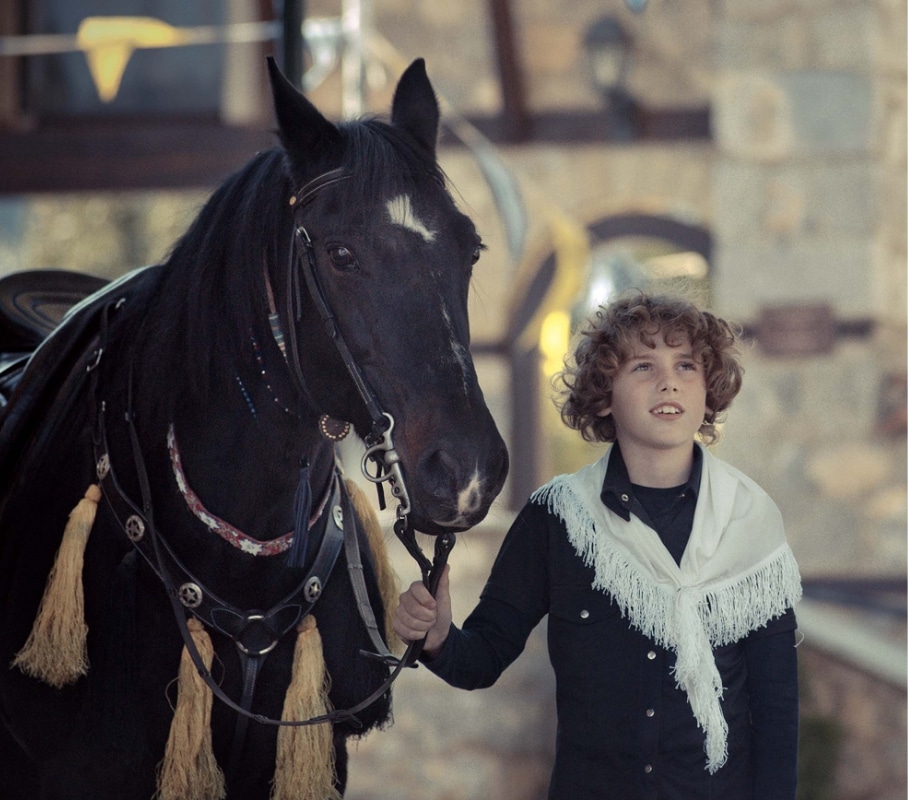
Today, Siatista remains lively and outward-looking: its traditional cafés fill with voices, the New Year’s Boubousaria and the August 15th Horsemen keep tradition alive, and the modern Fiesta Voio brings music, celebration, and youthful energy to the town every summer. Whichever season you decide to visit, you are certain to have a wonderful time and to remember this place long after you leave.
Municipality of Voio
Manor homes carrying memory, bridges carrying history
Amid peaks, rivers, and stone bridges, Voio unfolds with the charm of an open-air museum of architecture and memory. A journey here reveals a truly unique place, where the art of stone became an entire identity and people continue to build, create, and celebrate in rhythm with the seasons.
The Municipality of Voio, with Siatista as its seat, lies at the western edge of the Regional Unit of Kozani, right at the natural borders with Kastoria and Grevena. Here, where mountain ranges meet the valley of the Pramoritsa River, the Mastorochoria (the “craftsmen’s villages”) keep alive a craft that once spread tall throughout the Balkan Peninsula, and the elegant Siatista is a reminder that tradition and progress can coexist. This is a place that will effortlessly win you over at first glance, through its authentic hospitality and the sense that time flows differently here.
The nobility of Siatista
Perched at 920 meters, Siatista is the heart of Voio. Its two neighborhoods, Chora and Geraneia, resemble living stage sets from another era, thanks to their 18th and 19th-century mansions with formal reception rooms (ondades), painted ceilings, and churches adorned with masterful frescoes. The town prospered through fur processing and trade, which took Siatistans as far as Vienna, Moscow, and Budapest. Remains of those prosperous times include the impressive merchants’ residences and a reputation for intellectual cultivation, visible through schools, libraries, and local benefactors who fostered a flourishing cultural spirit in the mountains. Siatista is also known for its sun-dried wine, a tradition that goes back centuries and continues to this day, in wineries that open their doors to travelers and wine lovers.
The stone-built craftsmen’s villages (Mastorochoria)
If Siatista is the soul of Voio, that makes Mastorochoria the hands of Voio. Pentalofos, Vythos, Dilofo, Agia Sotira, Rodochori, Krimini, Kypseli, and Morfi are villages built with the precision and sensitivity of the renowned master stonemasons who constructed bridges and churches across Greece and the Balkans. In Pentalofos, the tower houses and churches stand proudly like works of art, while in Vythos and Dilofo, cobblestone lanes climb the slopes with panoramic views of the mountains. Each village has its own color and rhythm, yet together they form an authentic tapestry of historical continuity.
Bridges, forests, and trails
Here, stone is not a mere building material; it is a way of life. From the bridges of Tsioukari and Morfi to those in Tsaknochori and Chrysavgi, every arch tells its own story. Trails follow riverbeds and ravines, leading to waterfalls, monasteries, and small green valleys. The slopes of Mount Voio and Mount Bourinos, the region’s two mountains, are a haven for hikers and nature aficionados. Across their trails, the view stretches as far as Lake Polyfytos and Grevena, while the peaks are suitable for mountain biking and paragliding, with flights soaring above the Macedonian landscape.
Monasteries and memories
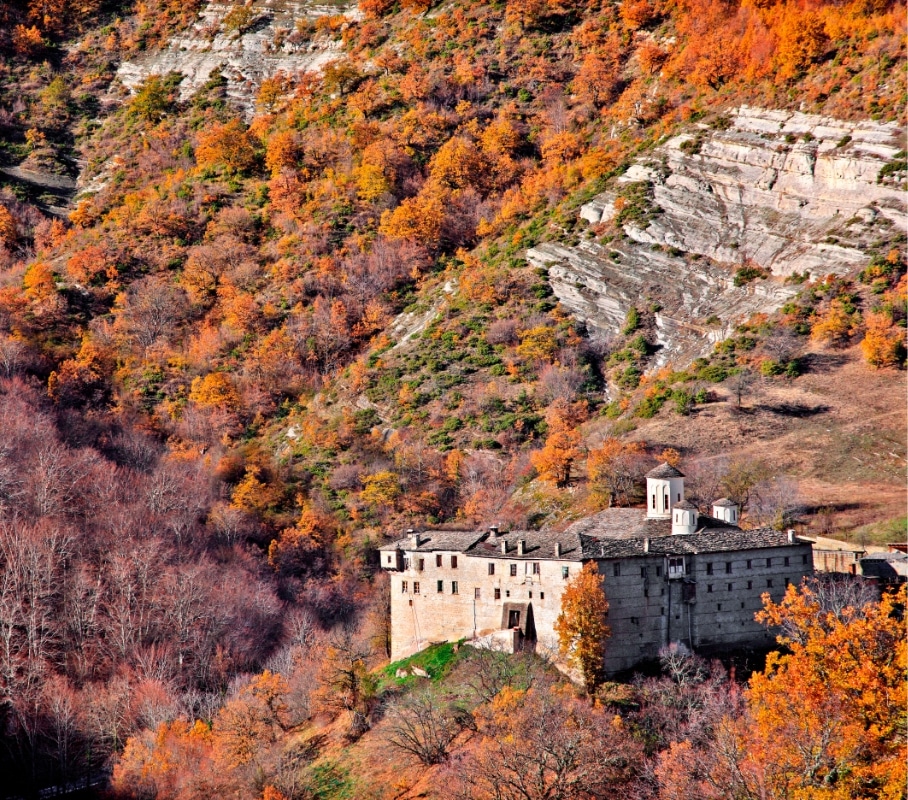
From the Episcopal Church of Sisani to the Monastery of Agia Triada in Vythos, the Dormition of the Theotokos in Mikrocastro, Agia Paraskevi in Namata, and the Transfiguration of the Savior in Dryovouno, the monasteries of Voio stand as silent witnesses to centuries of faith and resilience. Many of them are built in locations with breathtaking views, combining the stillness of prayer with the grandeur of the landscape. This image is complemented by Siatista’s museums: the Ecclesiastical Museum, the Paleontological Collection, and the Botanical Museum illuminate different aspects of the region’s cultural identity, reflecting its enduring relationship with both faith and knowledge.
The taste of the mountains
Voio’s table is set with simplicity, imagination, and respect for seasonality and the gifts of the land. Sisani beans, sarmadia—stuffed cabbage rolls made with armia (pickled cabbage leaves), rice, and minced meat—“paleo” (slow-cooked mutton with leek),carp with onions, pies with cracklings, mushrooms, and batzos—the signature cheese of Western Macedonia—offer a taste of local traditional cuisine. As the seasons change, the table is enriched with autumn’s produce. The renowned chestnuts make their appearance in the famous Kastanohoria (Chestnut Villages), even celebrated with their very own festivals, while Siatista’s famous sun-dried wine accompanies everyday moments of relaxation and companionship, recalling the region’s long tradition in viticulture and winemaking.
Festivals and longstanding traditions
From the Kladaries in December, when bonfires are lit in every neighborhood, to the Boubousaria in January, the villages of Voio move to the rhythms of fire, music, and community traditions. In summer, the Horsemen of the Virgin Mary fill Siatista with colors and horses, while food festivals in several villages highlight the region’s products and strong sense of community. Alongside these traditional celebrations, newer festivals fill the Municipality’s contemporary identity with a newfound energy: Fiesta Voio, Forestival, the Voio Folklore Festival, PELEKON, and the VoioRace connect art, nature, and participation, showing that Voio continues to inspire and create.
Pages of glory and culture, written among mountains and vineyards
The history of Siatista begins in the 15th century, when refugees from the lowlands of Macedonia climbed the slopes of Siniatsiko to escape Ottoman raids. There, among the mountains, a town was born that would stand out for its intellect, resilience, and creativity. Its two neighborhoods, Chora and Gerania, gradually developed around churches and mansions, preserving their Macedonian identity to this day.
From the 17th to the 19th century, Siatista experienced its great era of prosperity. Its merchants traveled to Vienna, Trieste, Venice, Bucharest, and Budapest, bringing back both wealth and fresh ideas from Europe. The renowned pragmateftades (merchant traders) contributed to the spread of Enlightenment ideals within the Greek world, while the town’s schools and libraries flourished. Prominent figures emerged, such as Theodoros Manousis, the first Professor of History at the University of Athens and its rector in 1845, and Ioannis Trampantzis, a major benefactor who founded the Trampantzeio Gymnasium. In the late 18th century, the Markides Pouliou brothers, Georgios and Pouplios, published the first Greek newspaper in Vienna, contributing to the dissemination of the revolutionary texts of Rigas Feraios. Rigas was executed in 1798 in Belgrade, along with his youngest companion, the 22-year-old Siatistan Theoharis Tourountzias.
During the 20th century, Siatista once again wrote history. In 1912, during the Battle of Siatista, local residents, together with Cretan volunteers under Michail Anastasakis and chieftain Leonidas Papamalekos, fought heroically for the town’s liberation. Three decades later, during World War II, the region’s people continued their resistance, participating in the battles of Vigla and Fardykampos (1943), marking some of the most significant moments of the Resistance in northern Greece. In the years that followed, new benefactors such as Anastasios Tsipos, the Papageorgiou brothers, and Konstantinos Papanikolaou carried on the legacy of their predecessors by founding schools, hospitals, and charitable institutions. Today, Siatista honors its multifaceted and rich past while confidently looking towards the future.
The customs of Voio are living memories of a community that maintains a deep connection with time, the seasons, and its roots. From the bonfires of December and the masquerades of the Twelve Days of Christmas to the equestrian celebrations of August 15th and the women’s dances of spring, each traditional festivity carries stories of faith, togetherness, and folk expression. Tradition and daily life come together in moments repeated year after year, passing down the distinctive identity of the place from one generation to the next.
In Voio, every season brings its own reason to visit: brace yourself for nature festivals, music gatherings, sporting events, and food celebrations that bring life to village squares, mountain slopes, and historic settlements. The area’s events bring people together, highlight the region’s character, and offer experiences that leave a lasting impression. Here, there is always something worth experiencing.
In Voio, you will encounter activities that combine adventure, tradition, and flavors. From flights above Siatista to hikes along the trails of Mount Vourinos, every experience here has its very own beauty. This is a place that invites you to discover it not only through its landscapes, but also through its people, tastes, and authentic experiences.
Paragliding over Siatista
If you are an adrenaline lover, paragliding over Siatista is one of the most thrilling experiences you can have in...
If you are an adrenaline lover, paragliding over Siatista is one of the most thrilling experiences you can have in Voio. One can fly from specially designated takeoff points and soar through the sky accompanied by experienced pilots, taking in sweeping views of the mountain ranges and vineyards below. The sport blends the excitement of a flight with the serenity of the natural landscape, offering a unique sense of freedom. National and international competitions are also held regularly, establishing Siatista as one of the leading paragliding destinations in Western Macedonia.
Hiking in Voio
With its dense forests, traditional trails, and stone-built villages, Voio is a paradise for nature enthusiasts. Routes of varying levels...
With its dense forests, traditional trails, and stone-built villages, Voio is a paradise for nature enthusiasts. Routes of varying levels guide you through hillsides, streams, and ridgelines, revealing the region’s natural tranquility and architectural heritage at every step. A key point of reference is the Vourinos Mountain Refuge, which serves as a starting point or rest stop for hikers, offering hospitality, information, and breathtaking views of the mountain rising proudly above Siatista.
Wine tourism in Siatista
With a centuries-old winemaking tradition, Siatista is an ideal destination for wine tourism aficionados. Here, you can tour local wineries,...
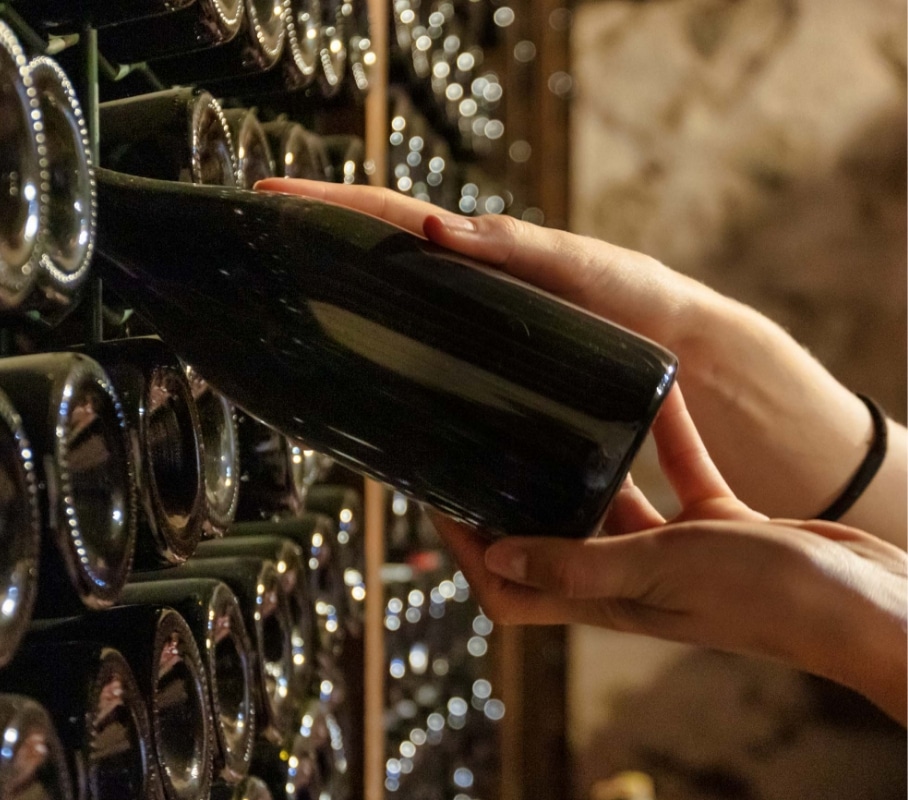
With a centuries-old winemaking tradition, Siatista is an ideal destination for wine tourism aficionados. Here, you can tour local wineries, learn about the production process, and sample exceptional varieties such as Xinomavro and Moschomavro, as well as the renowned sundried (Liasto) wine of Siatista. Tastings are paired with local products and vineyard tours, while the local wineries participate in the Wine Roads of Northern Greece, firmly placing Siatista on the Greek map of wine production.
A journey through the flavors of Voio
The region’s gastronomy is a tribute to authenticity, as well as to the land and its people. From mountain villages to fertile valleys, local flavors are born from simple, pure ingredients prepared with utmost care and respect for tradition. Recipes are passed down from generation to generation, keeping memory alive through the local cuisine.
In Sisani, the famous beans with the thin skin and rich flavor have become a symbol of the area. They are honored each year at the Bean Festival, where locals serve bean soups and traditional dishes, accompanied by music and dancing. In Kastanochoria, chestnuts take center stage in the fall. Every year, the chestnut festivals fill the villages with the aroma of freshly roasted chestnuts and the sounds of brass bands, reminding visitors of the deep connection between the local communities and the forest. The local cuisine features several distinctive recipes, such as palio, lamb cooked with leeks; sarmadia with armia, a quintessential winter dish made of pickled cabbage leaves stuffed with rice and ground meat; and mushroom-stuffed sarmades, a fasting and vegetarian variation of the same recipe. Grivadi (carp) cooked with onions, tomatoes, peppers, and herbs reveals the lakeside dimension of the region’s culinary tradition, while pie with tsigarides—rich and crispy, filled with pieces of fried pork—is reminiscent of one of the oldest gastronomic traditions of Western Macedonia. Simple, everyday delicacies are also part of the Voio table, such as eggs with local batzos cheese, a tangy meze that pairs perfectly with tsipouro. Among desserts, saliaria stand out — fluffy sweets made with cloves, cinnamon, walnuts, and orange juice, fragrant with homemade warmth.
An inseparable part of the region’s gastronomic identity is the renowned wine of Siatista. Its vineyards produce quality wines from varieties such as Xinomavro and Moschomavro, while the most famous of all—rich in history and crafted through a unique production method—is the sweet sun-dried Liasto wine, which has become a true hallmark of the area.
In the Kastanochoria, chestnuts are the hallmark of autumn and local tradition. Every year, the chestnut festivals fill the villages with the aroma of freshly roasted chestnuts and the sounds of brass bands, reminding visitors of the deep connection between the local communities and the forest and land.