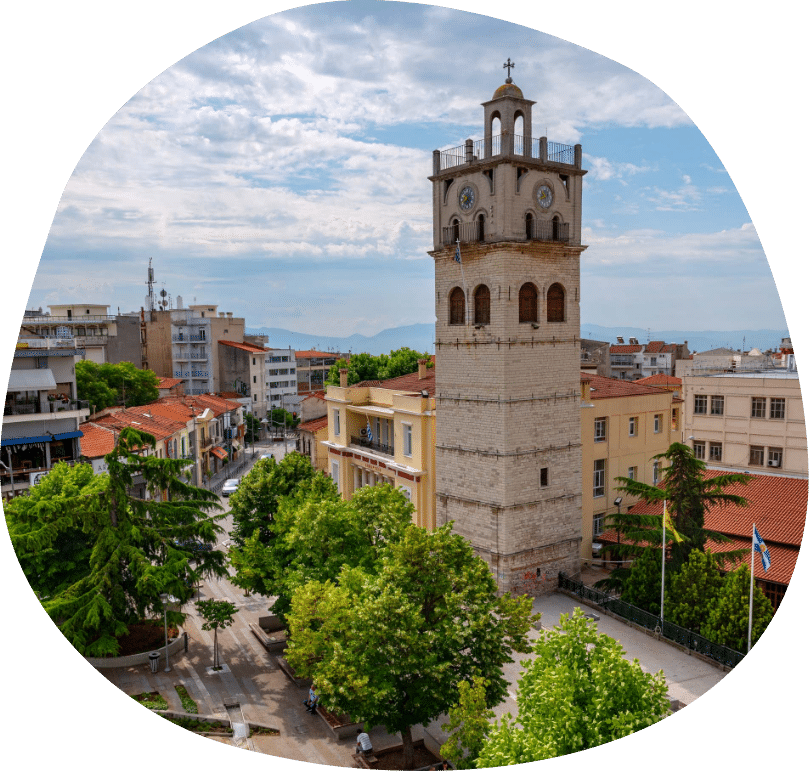
The history of Kozani begins in the Palaeolithic era and continues uninterrupted to the present day. Archaeological findings show that the area has long been connected to the wider Greek world. During the reign of Philip II (359–336 BC), the small kingdoms of Upper Macedonia were united into the Macedonian Kingdom, and the Elimiotes, tribe of the region, took part in Alexander the Great’s campaign as far as the Indus River.
In 168 BC, following the Battle of Pydna, the region came under Roman rule and later became part of the Byzantine Empire. In 1389 AD, following the Battle of Kosovo, the Ottomans occupied the region, while a few years later, in 1392 AD, settlers from Epirus arrived and established the settlement that would gradually evolve into present-day Kozani.
Ottoman rule lasted for more than five centuries, during which Kozani experienced its greatest period of prosperity in the 17th century. This flourishing was also supported by the imperial firman secured by Charisios Trantas, which designated Kozani as a Malikâne— an estate belonging to the Sultan’s mother—and granted special privileges to its inhabitants, including the prohibition of Muslim settlement and the freedom to practise their religion. The city developed extensive commercial ties with Constantinople, Hungary, Poland, and Germany, while its products —most notably saffron—were traded throughout Europe. At the same time, intellectual life flourished: schools were founded, along with the famous Library of Kozani (1668), supported by a prosperous diaspora community.
Despite periods of conflict and plundering during the 18th century, the city continued to grow. In the 19th century, Kozani’s inhabitants played an active role in the Modern Greek Enlightenment and the War of Independence of 1821. Liberation came on 11 October, 1912, when the Greek army entered the city triumphantly following the Battle of Sarantaporo. In 1923, approximately 1,400 refugee families from Asia Minor and Pontus arrived, breathing new life into Kozani’s society and economy.
During the years of the Second World War, the city endured the harshships of German occupation, while the Civil War that followed left a profound mark on its post-war course. With the return of peace, Kozani gradually entered a new era of growth closely linked to the energy units of the Public Power Corporation (DEI).
As you explore Kozani, you will see how this long historical journey —from antiquity to the modern era— continues to shape the city’s distinctive character.